
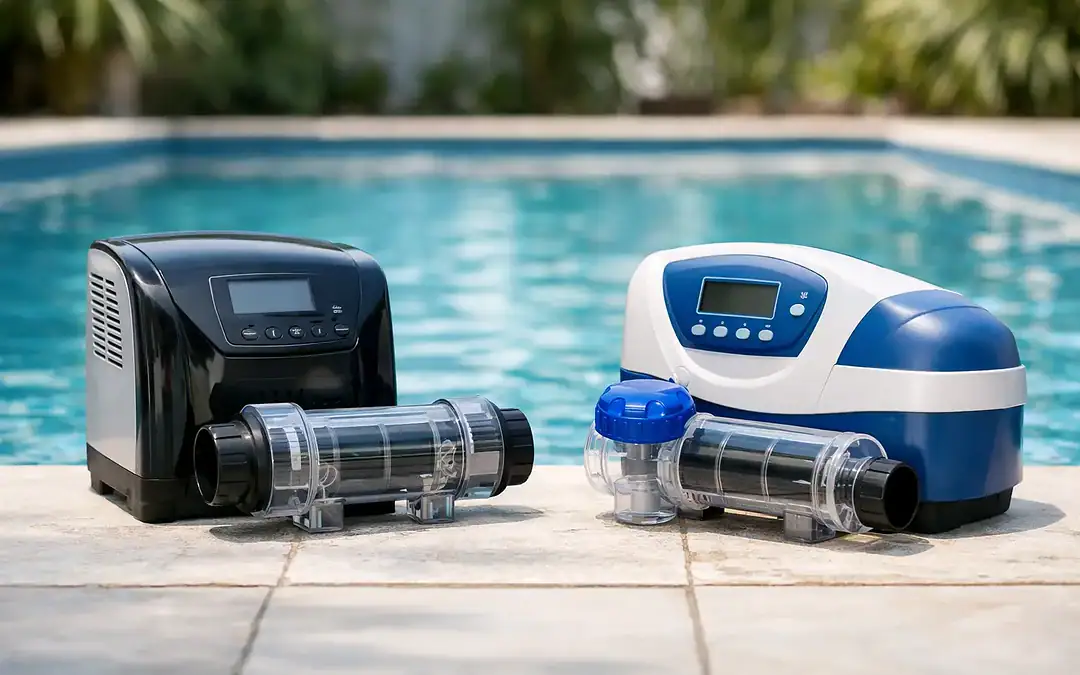
When a chlorinator starts producing weak chlorine, throws error codes or simply stops keeping the pool right, most owners end up asking the same question: k chlor vs zodiac chlorinator – which one actually gives better value once you factor in the cell, the warranty and the cost of keeping it running?
That question matters because the wrong choice can lock you into higher replacement costs for years. A chlorinator is not just a one-off purchase. It is an ongoing ownership cost, and that is where the differences between K-Chlor and Zodiac become much clearer.
K Chlor vs Zodiac chlorinator: the real comparison
At a basic level, both brands are in the same category. They are designed to sanitise saltwater pools by converting salt into chlorine, reducing the need to manually dose chemicals all the time. For many pool owners, either system can keep water clear when it is sized properly and maintained well.
The difference is not whether both can chlorinate a pool. The difference is what happens after a few seasons of use. That is usually where buyers either save money or spend more than they expected.
K-Chlor is often the stronger option for buyers who want straightforward replacement, strong warranty backing and better value over the long term. Zodiac has broad brand recognition, and plenty of pools already run Zodiac systems, but replacement parts and ongoing upkeep can become expensive depending on the model.
Where K-Chlor usually wins
K-Chlor has built its reputation around practical ownership costs. That means good output, reliable operation and a clearer path when the time comes to replace a worn cell or upgrade the unit. For many homeowners, that is the point that matters most.
A major advantage is warranty confidence. A 5-year full warranty on K-Chlor units is a serious buying point because it reduces the risk around replacement. Buyers are not just paying for a box on the wall. They are paying for reliability and backup if something goes wrong.
There is also a value argument that is hard to ignore. If your current system is ageing, replacing the cell or moving to a K-Chlor unit can often be a more sensible spend than staying tied to higher-cost branded parts. That is especially true when the rest of the pool equipment is still fine and you do not need a complete equipment overhaul.
K-Chlor also suits buyers who want uncomplicated support. If you are comparing model numbers, trying to match a cell, or working out whether a full unit change makes more sense, specialist guidance matters. This category is full of expensive guesswork when buyers are left on their own.
Where Zodiac may still make sense
To be fair, Zodiac is not a poor option just because it can cost more. If you already have a Zodiac setup in place and the system is otherwise in good condition, replacing the correct cell may be the most practical move. There is no point changing an entire chlorinator system if only the cell has reached the end of its life.
Zodiac can also make sense for owners who prefer to stick with the brand already installed at their property. Some people want the simplest possible swap without changing controls, plumbing position or familiarity with the unit. That is a reasonable position if the numbers stack up.
The catch is that brand loyalty should not override value. If a replacement option delivers the same job with better pricing and dependable performance, it is worth looking at seriously. A lot of pool owners spend too much simply because they assume the original brand is the only safe choice.
The biggest factor: replacement cell cost
For most saltwater chlorinators, the cell is the part that eventually wears out. It has a working life, and once output drops off, the pool starts telling you before the chlorinator does. You will notice poor sanitation, extra chemical correction, algae pressure or inconsistent chlorine readings.
This is where the K-Chlor versus Zodiac comparison gets more practical. If you own a Zodiac chlorinator, you may not need to replace the whole system at all. A compatible replacement cell can often restore proper chlorine production at a much lower cost than a full branded system replacement.
That is one of the smartest ways to manage pool maintenance spend. Instead of treating every failure as a complete unit replacement, you focus on the part that has actually worn out. In many cases, that saves a substantial amount of money while keeping the pool running properly.
For buyers who are not attached to a specific brand, K-Chlor units and replacement options are often more attractive because they combine dependable performance with stronger value. The money saved upfront and over time can be significant.
Performance is not just about chlorine output
A lot of buyers compare chlorinators by looking only at production numbers. Output matters, but it is not the full story. A chlorinator also needs to be easy to live with. That includes reliability, replacement availability, support and how expensive the unit is to keep operating over several years.
A chlorinator that performs well but becomes costly every time a part needs replacing is not necessarily the better buy. Likewise, a cheaper unit with poor support or questionable warranty backing can become a headache fast.
This is why K-Chlor tends to appeal to practical buyers. It is not just a matter of whether it produces chlorine. It is about whether the overall ownership experience stays affordable and manageable.
When to replace the cell and when to replace the whole chlorinator
This is where many pool owners either save money or overspend.
If your power pack is still working properly and the issue is clearly cell wear, replacing the cell is usually the smart move. That gets chlorine production back without paying for a complete new system. It is the most cost-effective option when the rest of the chlorinator is sound.
If the unit has multiple faults, inconsistent operation, visible age, or poor reliability beyond the cell itself, replacing the whole chlorinator can be the better investment. Spending money on a new cell for an unreliable controller does not always make sense.
That is the practical lens to use in any k chlor vs zodiac chlorinator decision. Look at the condition of the whole system, not just the brand badge. The cheapest short-term option is not always the cheapest long-term option.
Compatibility matters more than people expect
One of the most common mistakes is ordering the wrong replacement cell. Pool owners often assume cells from the same brand are interchangeable across all models. They are not. Shape, lead configuration, housing style and compatibility details all matter.
That is why specialist advice has real value. A correct replacement matched to your existing setup can save time, freight hassle and the cost of sending the wrong part back. It also gives buyers more confidence when choosing between a genuine replacement and a compatible aftermarket option.
For Zodiac owners in particular, this is worth checking carefully. If the goal is to avoid replacing the whole system, the right compatible cell can be the most cost-effective answer.
Which one is better value?
If you want a straight answer, K-Chlor is usually the better value choice for buyers shopping on performance, warranty and long-term ownership cost. It is a strong option for replacing an ageing system, and it makes sense for pool owners who want reliability without paying a premium for the badge alone.
Zodiac still has a place, particularly when an existing Zodiac setup only needs a correct replacement cell. In that situation, keeping the current system going can be the most practical move. But if you are comparing from scratch, or your current unit is near the end, K-Chlor often comes out ahead where it counts – purchase value, support and ongoing affordability.
That is why many buyers now look harder at replacement cells and smarter upgrade paths instead of defaulting to full branded replacements. Best Pool Chlorinators sees this every day: people do not want more equipment than they need, they just want chlorine production restored properly at the right price.
A good chlorinator should keep the pool easy to manage, not turn maintenance into an expensive guessing game. If you start with that mindset, the right decision becomes much clearer.