
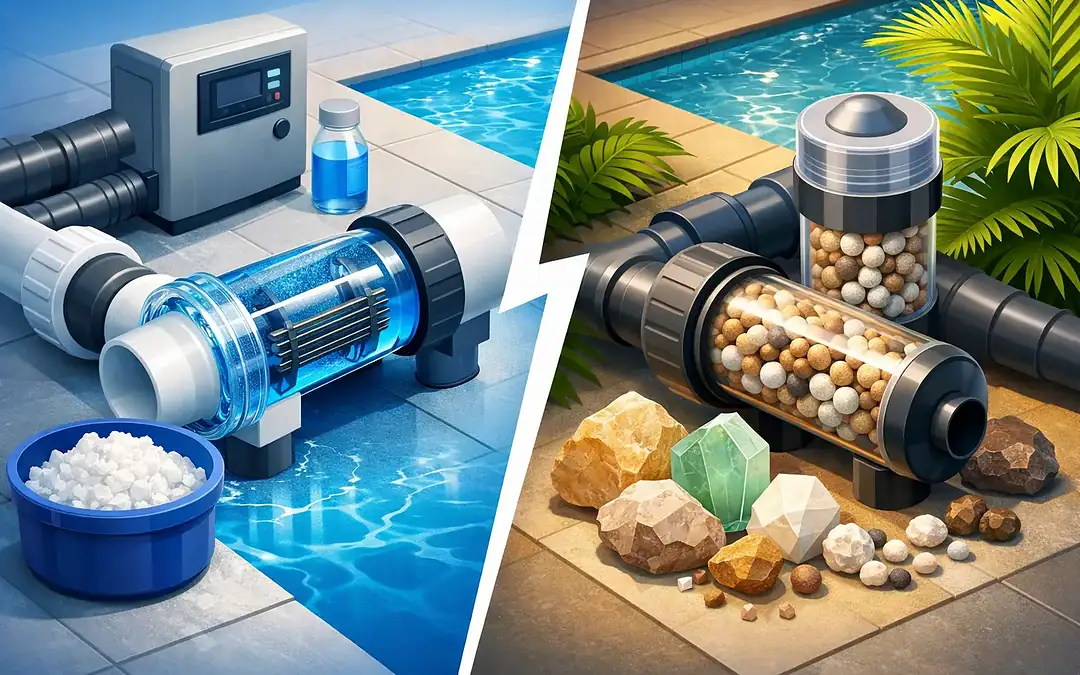
If you’re weighing up a saltwater chlorinator vs mineral system, you’re probably trying to avoid two expensive mistakes at once – buying the wrong setup and paying more than you need to keep the pool clean. On paper, both promise easier pool care and nicer swimming conditions. In practice, they work differently, cost differently and suit different owners.
For most Australian pool owners, the real question is not which system sounds better in a brochure. It is which one gives reliable sanitation, manageable running costs and less mucking around over the long term. That is where the gap starts to show.
Saltwater chlorinator vs mineral system: the core difference
A saltwater chlorinator sanitises the pool by converting dissolved salt into chlorine through the chlorinator cell. The chlorine is generated in the system, does the sanitising work in the water, then cycles back and is regenerated. You still have chlorine in the pool, but you are producing it automatically instead of manually dosing all the time.
A mineral system uses added minerals, usually magnesium, potassium or other blends, alongside a sanitiser. Despite the marketing, minerals are not a complete substitute for proper sanitation. In most cases, a mineral pool still relies on chlorine, or sometimes another sanitiser, to keep algae and bacteria under control.
That point matters because some pool owners assume mineral means chemical-free. It does not. If hygiene, algae control and consistent water treatment are the priority, chlorine still does the heavy lifting.
Why salt chlorination is usually the more practical choice
Salt chlorination has one big advantage – it is straightforward. A properly sized chlorinator produces chlorine automatically, reduces manual dosing and gives you a system most pool shops, service techs and homeowners already understand.
That means fewer surprises. If output drops, you are generally looking at a known set of issues such as an ageing cell, calcium build-up, poor water balance or a control unit fault. Those problems are easier to diagnose and often cheaper to fix than replacing an entire sanitising approach.
This is also where replacement value matters. If your chlorinator cell wears out, you do not necessarily need to bin the whole unit and start again. In many cases, replacing the cell restores chlorine production at a far lower cost than a full system replacement. For budget-conscious owners, that is one of the smartest maintenance decisions you can make.
Where mineral systems appeal
Mineral systems are popular because of how the water feels. Many swimmers describe mineral water as softer on the skin and eyes, and some owners like the premium positioning. If comfort is your main driver and you do not mind paying extra for mineral blends and related consumables, that appeal is real.
There is also a perception that mineral systems are more natural. The issue is that perception can blur the real maintenance picture. Minerals may improve the swimming feel, but they do not remove the need for proper sanitation management. If chlorine levels are too low, a mineral pool can still run into the same algae, clarity and hygiene problems as any other pool.
So yes, mineral systems can be pleasant to swim in. They are just not magic.
Upfront cost and ongoing cost
Cost is where many comparisons get fuzzy, because sellers tend to focus on the feature that suits their product. The better way to compare a saltwater chlorinator vs mineral system is to separate setup cost from ownership cost.
A saltwater chlorinator often makes more sense over time because salt is affordable, chlorine generation is automated and replacement cells are widely available. If you already have a compatible chlorinator, swapping a worn cell is usually the cheapest path back to full output.
Mineral systems can carry higher ongoing costs because the mineral blends need replenishing, and depending on the setup, you may still be adding sanitiser support products. If you like the water feel and are happy to pay for it, that may be fine. But if your priority is dependable sanitation at the best value, salt chlorination usually wins.
This is especially relevant for pool owners who have been told to replace a full chlorinator when the cell is the only worn component. Often, that is unnecessary spending. A quality replacement cell can solve the actual problem without blowing out the maintenance budget.
Day-to-day maintenance
Neither option is maintenance-free. That is worth saying plainly.
Salt chlorinators still need regular water testing, occasional cell inspection and cleaning when calcium builds up. You also need the chlorinator to be correctly sized for the pool and adjusted for the season. In summer, chlorine demand goes up. Heavy rain, pool parties and hot weather can all push the system harder.
Mineral systems also need monitoring, plus the added task of managing mineral levels and top-ups. Depending on the system, that can mean extra consumables and more variables to keep balanced. Some owners are happy with that. Others end up paying for a premium system only to find it is not actually less work.
If you want the simpler maintenance path, salt is generally easier to live with.
Performance in Australian conditions
Australian pools put sanitising systems under real pressure. Long hot spells, intense UV, storms and heavy pool use all increase chlorine demand. In those conditions, consistency matters more than clever branding.
A good saltwater chlorinator is built for this kind of workload. When matched correctly to the pool size and run time, it gives steady chlorine production and predictable performance. That reliability is a major reason salt systems remain the go-to option for so many residential pools.
Mineral systems can still perform well, but they are not automatically better in harsh summer conditions. They still depend on proper sanitation support, and if the owner is underdosing or assuming minerals alone are enough, water quality can turn quickly.
For practical pool care, predictable output beats marketing claims every time.
When a mineral system might suit you better
There are cases where a mineral system makes sense. If you value a softer swimming feel, are comfortable with the added product cost and understand that you still need proper sanitiser control, it can be a good fit.
It may also appeal if you are building a new pool and are happy to pay more for a premium-style setup from day one. For some households, that comfort factor is worth it.
The main thing is going in with clear expectations. Choose minerals because you want the water feel, not because you think it eliminates chlorine or dramatically cuts maintenance.
When a saltwater chlorinator is the better buy
For most homeowners, salt chlorination is the stronger all-round option. It is reliable, familiar, cost-effective and easier to support over the life of the pool. It also gives you more flexibility when parts wear out, because a replacement cell can often restore the system without forcing a full upgrade.
That matters if you are trying to keep ownership costs under control. A lot of pool equipment gets replaced earlier than necessary simply because the owner is not told there is a cheaper repair path. Specialist advice makes a big difference here. If the cell is spent but the unit is still sound, replacing the cell is usually the smart move.
That is one reason many buyers stick with salt systems and simply upgrade to a better chlorinator or fit a compatible replacement cell when output starts falling away.
Saltwater chlorinator vs mineral system: what should you choose?
If your goal is low-fuss sanitation, clear water and better long-term value, a saltwater chlorinator is usually the better choice. It is the more practical system for everyday pool ownership, especially when replacement cells are available and full system replacement is not required.
If your priority is water feel and you are comfortable with higher ongoing product costs, a mineral system may still suit. Just do not mistake a nicer swimming feel for simpler or cheaper sanitation.
For pool owners who want straight answers, this comes down to value. Salt chlorination does the core job well, keeps maintenance more predictable and gives you a clear upgrade path when parts wear out. If you need help matching a replacement cell or deciding whether your current unit is worth saving, that is where specialist guidance pays for itself – and where Best Pool Chlorinators can help you avoid replacing more than you need.